
Nerve Plant
Fittonia albivenis
ClosedSmall
The classic closed-terrarium plant. Bright leaf veins, loves humidity, dramatically wilts if it dries out (and perks back up fast).
View plant →Closed terrariums are sealed jars and bottles that trap moisture, creating a warm, humid mini-rainforest. These plants love exactly that — think ferns, moss, fittonia and other tropical species that thrive in constant humidity and lower light. (Succulents and cacti do not belong here — they rot.)
33 plants below. Tap any photo for the full plant page and its care notes.
Fittonia albivenis
The classic closed-terrarium plant. Bright leaf veins, loves humidity, dramatically wilts if it dries out (and perks back up fast).
View plant →
Soleirolia soleirolii
A dense mat of tiny leaves that spreads into a living green carpet. Needs constant moisture — perfect for a sealed jar.
View plant →
Selaginella kraussiana
Feathery, fern-like ground cover. One of the few plants that genuinely needs sealed humidity to look its best.
View plant →
Ficus pumila
A vigorous little climber that will scramble over hardscape and up the glass. Trim it to keep it in check.
View plant →
Pilea depressa
Tiny round leaves on delicate trailing stems. Fast-growing filler that softens edges beautifully.
View plant →
Adiantum raddianum
Gorgeous, airy fronds — but famously fussy about humidity. A closed terrarium is the one place it reliably thrives.
View plant →
Nephrolepis cordifolia "Duffii"
A compact, forgiving fern with a faint lemon scent. Much easier than most ferns and stays small.
View plant →
Pellaea rotundifolia
Round, leathery leaflets along arching stems. Tolerates a bit more airflow than most ferns.
View plant →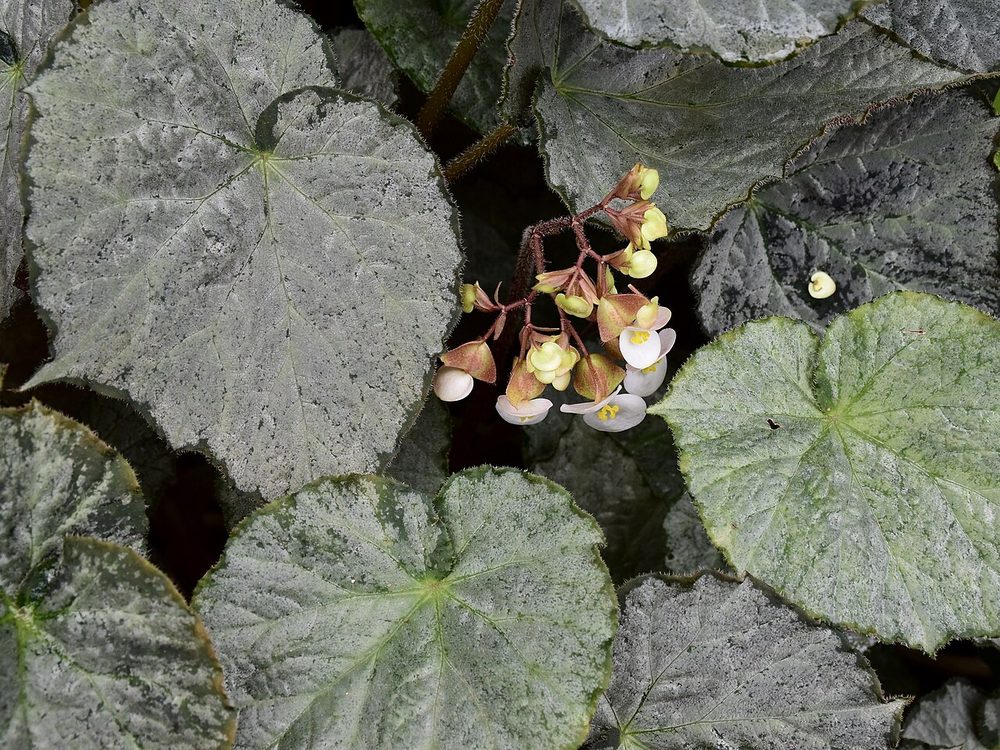
Begonia rex
Grown for jaw-dropping leaf colour — silver, plum, emerald. Loves humidity, hates soggy crowns.
View plant →
Ludisia discolor
Grown for velvety dark leaves with pinstripe veins rather than flowers. A striking centrepiece.
View plant →
Episcia cupreata
Textured coppery foliage plus little red-orange flowers. Sends out runners like a strawberry.
View plant →
Leucobryum glaucum
Domed, pillowy mounds of moss. The quickest way to make a terrarium feel like a tiny forest floor.
View plant →
Hypnum sp.
Flat-growing moss that drapes over soil and stone. Great for covering bare substrate quickly.
View plant →
Epipremnum aureum
Nearly unkillable. Handles almost any conditions and grows fast — a safe first plant. Pinch it back often.
View plant →
Peperomia prostrata
Tiny patterned leaves like little turtle shells on fine trailing stems. Slow but very charming.
View plant →
Peperomia caperata
Deeply textured, rippled leaves in a tidy mound. Semi-succulent, so it copes with either environment.
View plant →
Syngonium podophyllum
Arrow-shaped leaves in green, pink or cream. Grows quickly, so keep the compact varieties and prune.
View plant →
Hypoestes phyllostachya
Splashy pink, red or white speckled leaves for instant colour. Pinch the tips to stop it getting leggy.
View plant →
Cryptanthus bivittatus
A star-shaped bromeliad in striped pinks and bronzes. Stays put, wants good light, and adds bold structure.
View plant →
Chamaedorea elegans
A miniature palm that brings height while young. Eventually outgrows a terrarium, so treat it as temporary drama.
View plant →
Peperomia argyreia
Iconic teardrop leaves striped silver and green like watermelon rind, on deep-red stems. Semi-succulent, so it copes with either setup.
View plant →
Asplenium nidus
Broad, glossy, ripple-edged fronds unfurling from a central rosette. Architectural and forgiving — one of the easiest ferns.
View plant →
Saintpaulia ionantha
One of the few terrarium plants that flowers reliably — velvety leaves and clusters of purple, pink or white blooms. Keep water off the crown.
View plant →
Pilea cadierei
Dark leaves splashed with metallic silver. Bushy and quick-growing — pinch the tips to keep it compact.
View plant →
Selaginella uncinata
Feathery fronds with an iridescent blue-green shimmer. Needs constant sealed humidity or it quickly crisps up.
View plant →
Nepenthes
Dangling jug-shaped traps on a trailing vine. Loves the warmth and high humidity of a closed terrarium; distilled water only, never fertilise.
View plant →
Drosera adelae
Strappy leaves covered in glistening sticky dew that traps fungus gnats. The most terrarium-tolerant carnivore — just use distilled water and no feed.
View plant →
Neoregelia "Fireball"
A compact bromeliad that blushes fiery red in good light. The go-to vivarium bromeliad — stays small and pups into clusters.
View plant →
Oxalis triangularis
Deep-purple triangular leaves that fold up at night, with dainty pale-pink flowers. Grows from bulbs and bounces back even if it dies down.
View plant →
Philodendron hederaceum "Micans"
Heart-shaped leaves with a velvety, iridescent bronze-green sheen. An easy trailing aroid — pinch it back to keep it compact.
View plant →
Begonia bowerae
Small leaves edged with fine "eyelash" hairs and chocolate markings. A humidity-lover — keep water off the crown.
View plant →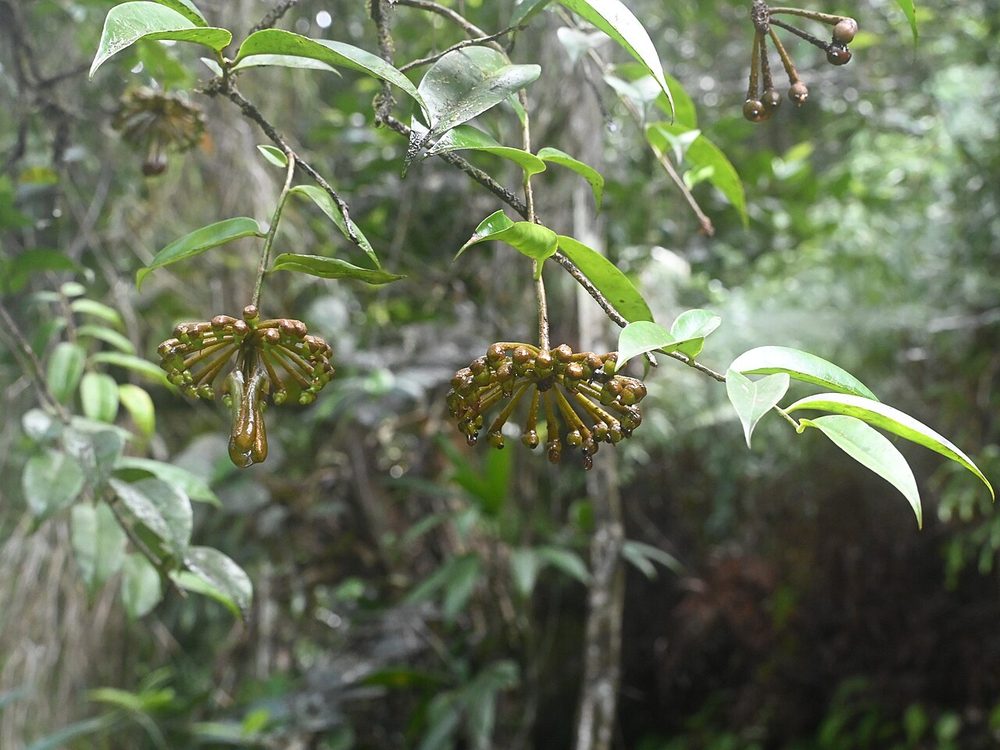
Marcgravia
A shingling climber that presses flat against hardscape and glass in neat overlapping leaves. Needs constant high humidity — a closed-terrarium specialist.
View plant →
Bolbitis heteroclita "Difformis"
A finely-cut, feathery fern that stays compact and can be grown epiphytically on wood. Wants the steady humidity of a closed setup.
View plant →A closed terrarium is a sealed world: high humidity, still air, steady warmth and — usually — lower light. The plants that thrive in it are tropical forest-floor species built for exactly those conditions. Look for three things: a love of constant humidity, tolerance of low-to-medium indirect light, and a small, slow habit that won't outgrow the glass in a season.
The single rule that matters most: never mix humidity-lovers with succulents or cacti. Every plant above wants the damp, sealed climate — the dry-air plants that would rot in it are listed at the bottom of this page so you know exactly what to leave out.
Carpets & moss (the forest floor): cushion moss and sheet moss green up the surface instantly, while baby's tears, nerve plant and spikemoss spread into a low living mat.
Feature plants (the centrepiece): rex begonia for jaw-dropping leaf colour, jewel orchid for velvety pinstriped foliage, and forgiving ferns like bird's nest fern and maidenhair fern.
Trailers & climbers (height and movement): creeping fig and marcgravia scramble up hardscape and glass; pothos and velvet-leaf philodendron trail from a raised spot.
Colour & flowers: polka dot plant and flame violet for splashes of pink and red, African violet for reliable blooms, and the fiery bromeliad Neoregelia 'Fireball'.
Carnivores (for the adventurous): a tropical pitcher plant or sundew loves closed-terrarium humidity — just use rain or distilled water and never fertilise.
Anything built for dry air will slowly rot in a sealed jar. Keep these for an open terrarium instead: succulents such as echeveria, jade plant, zebra haworthia and string of pearls; all cacti; air plants; and English ivy, which mildews in still, humid air. The Venus flytrap is the one carnivore to keep out too — it wants open airflow and a cool winter rest.
Humidity-loving tropicals: nerve plant (fittonia), moss, baby's tears, ferns like maidenhair and bird's nest, spikemoss, and colourful foliage such as rex begonia and polka dot plant. They all thrive in the warm, damp, still air a sealed jar creates. Avoid succulents and cacti — they need dry air and will rot.
No. Succulents and cacti store water and need dry air with good airflow; the trapped humidity of a closed terrarium rots them within weeks. Keep them for an open terrarium and fill a closed one with ferns, moss and fittonia instead.
Cushion moss for pillowy mounds and sheet moss for carpeting bare substrate are the two easiest. Both draw moisture from the humid air rather than roots, so they stay green with almost no effort in a sealed vessel — just use rain or distilled water to avoid mineral crusting.
Two or three in a small jar, a few more in a large one. Pick plants that share the same light and moisture needs, and leave room to grow — overplanting is the most common mistake and leads to crowding, poor airflow and mould.
Bright but indirect light is ideal — an east or north window, or a full-spectrum grow light in a dark room. Never direct sun: the glass magnifies it and cooks everything inside. Most closed-terrarium plants are shade-tolerant tropicals, so lower light suits them fine.
Nerve plant (fittonia) — it's cheap, compact and wilts dramatically when thirsty, then recovers within an hour of a mist, so it tells you exactly when something's wrong. Pothos and cushion moss are similarly forgiving first choices.
Join the FloraVessa list for new plant guides, build tips and seasonal care reminders — free, occasional, and no spam.
We store your email only to send these updates. Unsubscribe in one click.